Every year, hundreds of workers suffer serious injuries—or worse—because machinery was accidentally energized during maintenance. The solution? A clear, structured system called Lockout Tagout (LOTO). At its core, LOTO is a safety procedure that ensures machines are properly shut off and cannot be restarted until maintenance or servicing is complete. It’s not just policy—it’s protection.
LOTO isn’t a suggestion. It’s a legally enforceable standard under OSHA (Occupational Safety and Health Administration) and a fundamental requirement in manufacturing, utilities, construction, and any setting where hazardous energy exists. But despite widespread regulations, misunderstandings persist. Many workers think LOTO is just about slapping a tag on a switch. In reality, it's a full process involving identification, isolation, locking, verification, and communication.
Let’s break down exactly what lockout tagout (LOTO) is, how it works, and why skipping steps can be deadly.
The Core Purpose of LOTO: Preventing Hazardous Energy Releases
Machines don’t need to be “on” to be dangerous. Residual energy—mechanical, electrical, hydraulic, pneumatic, chemical, or thermal—can remain in systems long after shutdown. A spring under tension, pressurized fluid lines, or stored electrical charge can all unleash catastrophic force if mishandled.
LOTO exists to eliminate this risk by ensuring: - Energy-isolating devices (like circuit breakers or disconnects) are physically locked in the “off” position - Authorized personnel apply personal locks and tags - Stored energy is bled, blocked, or dissipated safely - No one can restart equipment without proper clearance
Without LOTO, workers are exposed to risks like unexpected startup, flying debris, electrocution, or burns. OSHA estimates that compliance with LOTO procedures prevents an estimated 120 fatalities and 50,000 injuries annually.
Example: A technician attempts to clear a jam in a conveyor belt. The machine appears off, but a coworker reactivates the system remotely. Result: severe crush injury. With LOTO, the conveyor would have been locked out at the main disconnect, making re-energization impossible without removing the lock.
How LOTO Works: The 6-Step Process
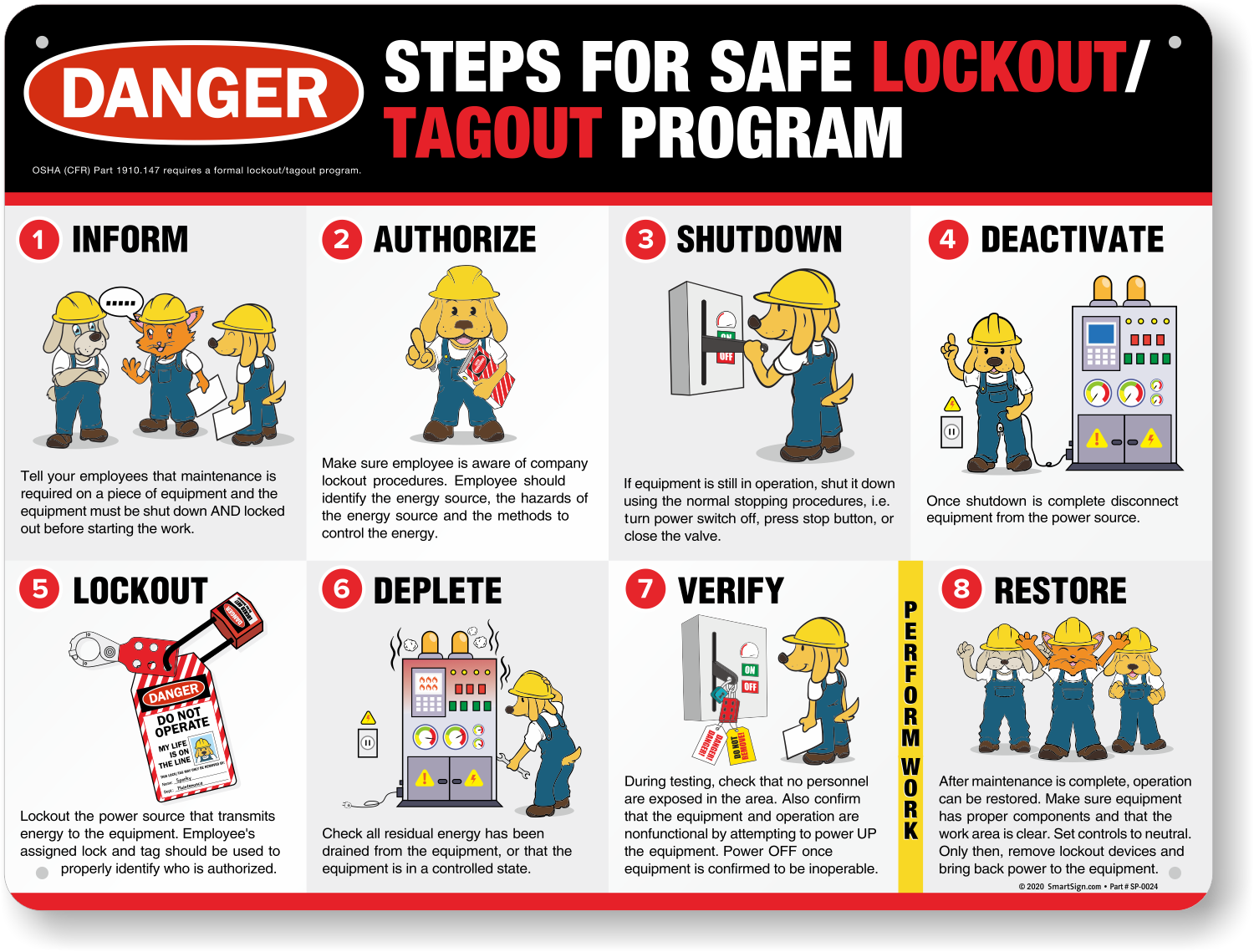
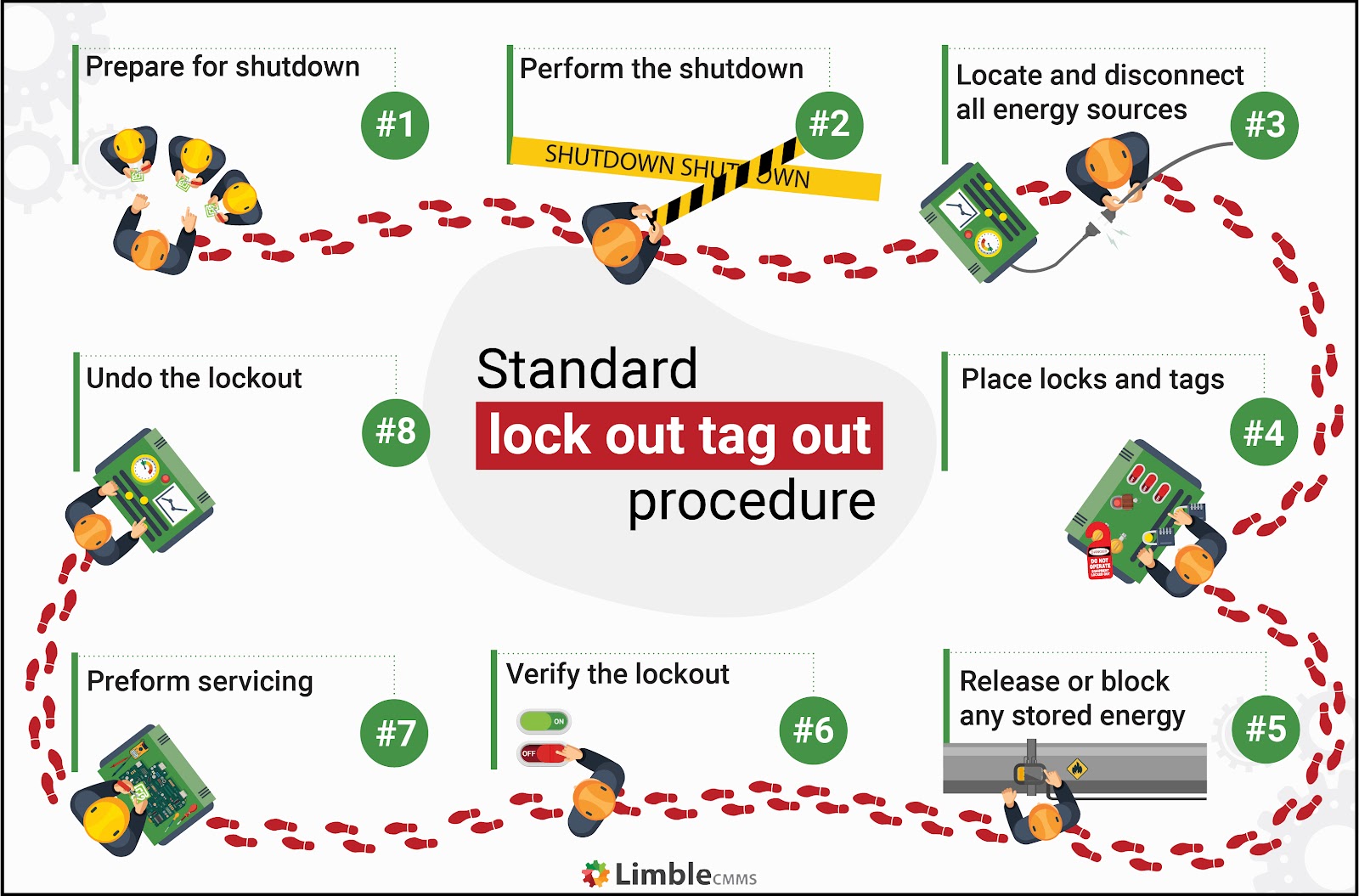
LOTO isn’t random—it follows a strict, repeatable sequence. Deviating from this process jeopardizes safety. Here’s the standard procedure:
1. Preparation Before any work begins, the authorized employee must identify:
- All energy sources powering the equipment (electrical, hydraulic, etc.)
- The type and location of energy-isolating devices
- Appropriate lockout devices and personal protective equipment (PPE)
Tip: Create equipment-specific LOTO procedures. A press brake needs different steps than a boiler.
2. Notification Alert all affected employees that maintenance is about to begin. This ensures no one tries to use the machine unknowingly.
3. Machine Shutdown Shut down the equipment using normal stopping procedures. Never assume “off” means safe.
4. Isolation and Lockout Isolate every energy source.
This might mean:
- Flipping a circuit breaker and locking it with a hasp
- Closing a valve and securing it with a lock
- Blocking moving parts with a mechanical stop
Each device must be secured with a lock that only the authorized employee can remove.
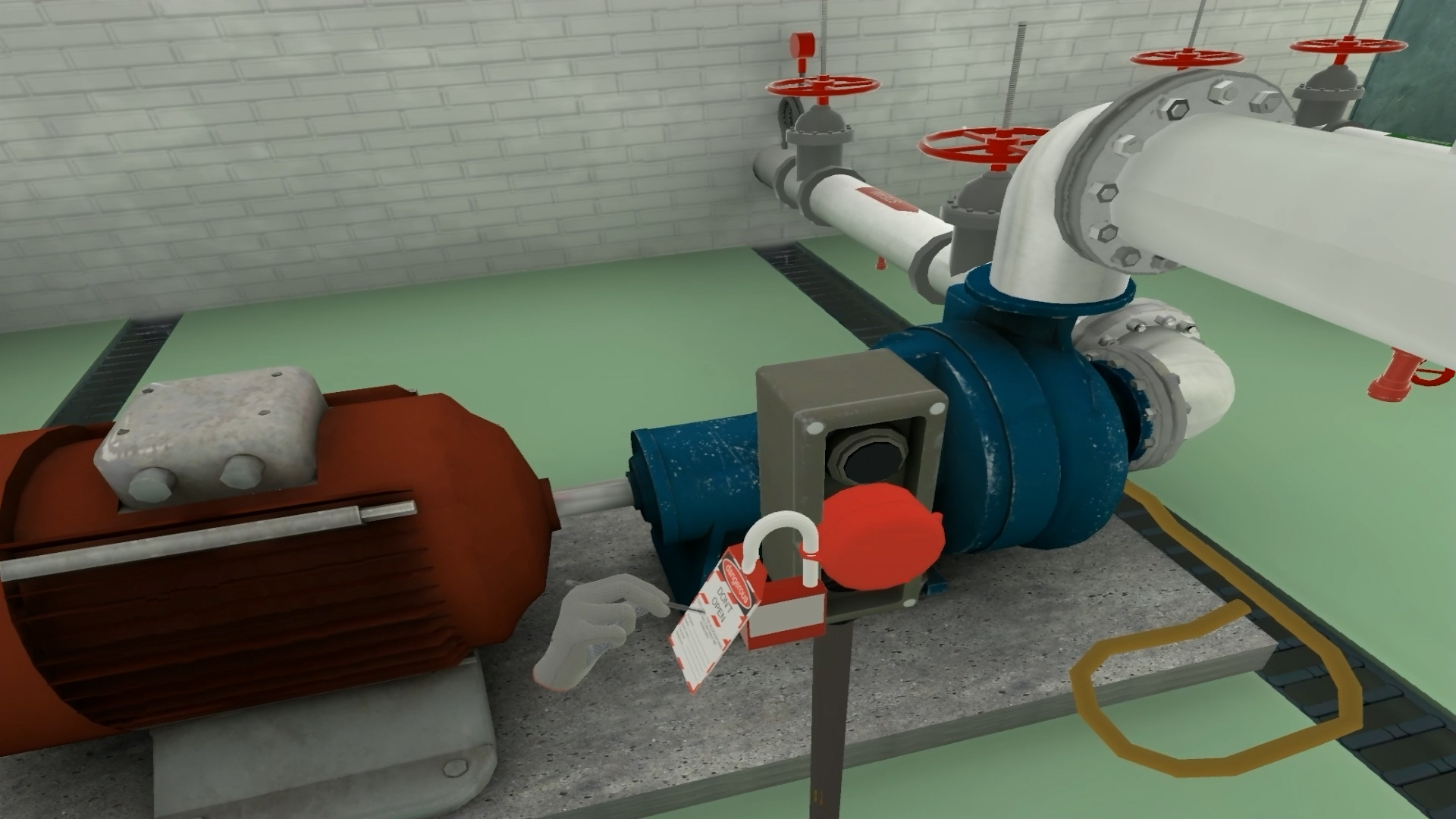
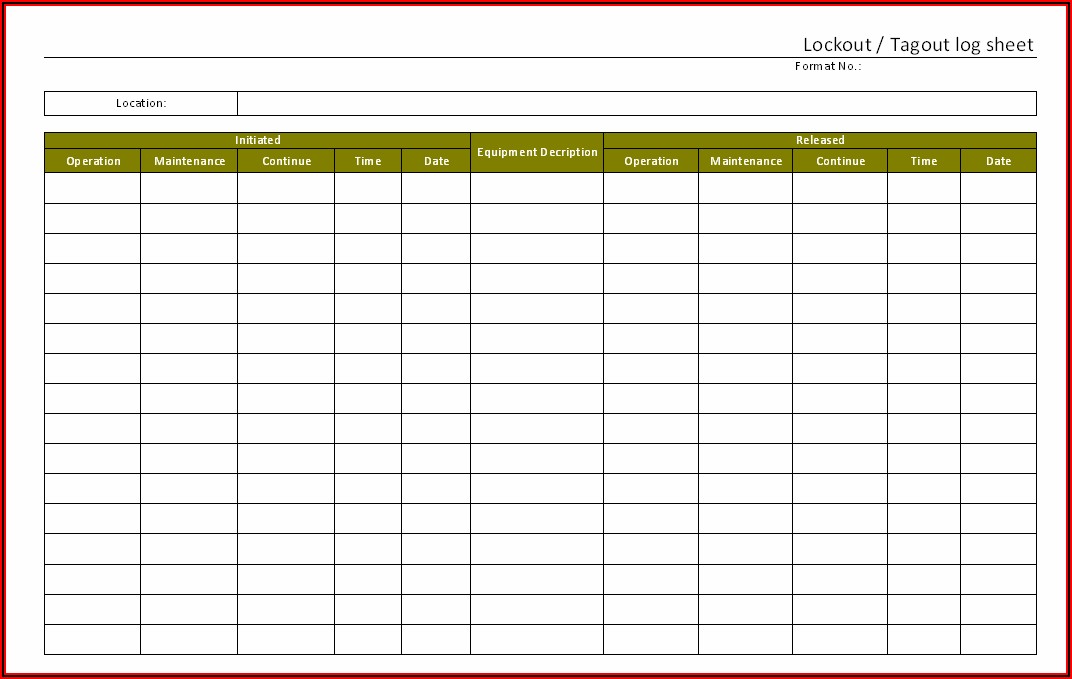
5. Application of Tags Attach a durable, standardized tag to each lock. The tag must include: - Name of the person who applied the lock - Date and time - Reason for lockout - Warning such as “Do Not Operate”
Tags are secondary to locks—they’re a communication tool, not a physical barrier.
6. Release of Stored Energy and Verification
This step is often overlooked but critical. Residual energy must be safely discharged: - Bleed air from pneumatic lines - Drain hydraulic fluid - Ground electrical capacitors
Finally, verify zero energy state by attempting to restart the machine (using the normal start switch). If it starts, the LOTO failed—repeat the process.
Only after all these steps can maintenance begin.
Who Is Responsible? Authorized vs. Affected Employees
Not everyone performs LOTO—but everyone plays a role.
- Authorized employees are trained to implement LOTO. They apply locks, discharge energy, and carry out servicing. They’re usually maintenance technicians or engineers.
- Affected employees operate or use the equipment but don’t service it. They must understand when LOTO is active and never attempt to bypass a lock or tag.
Miscommunication between these roles is a common cause of violations. For example, an operator sees a lock and assumes it’s a mistake, removing it to "help." This bypass can be fatal.
Real-world case: In 2017, a worker in a metal fabrication shop was killed when a colleague removed his LOTO device, believing the job was done. Training and clear communication could have prevented this tragedy.
Common LOTO Mistakes That Put Workers at Risk
Even with procedures in place, flaws creep in. These are among the most frequent—and dangerous—errors:
- Using group locks without individual locks: A single lock used by multiple people means one person can remove it, endangering others still working.
- Skipping verification: Assuming the machine is de-energized without testing it.
- Tag-only systems: Tags can be ignored or removed. OSHA requires physical locks unless the tag provides equivalent protection (rare).
- Poor lockout device quality: Flimsy hasps or easily duplicated keys undermine the entire system.
- Lack of periodic inspections: OSHA mandates annual audits of LOTO procedures. Skipping them leads to complacency and drift.
Workflow tip: Conduct surprise LOTO audits. Have a safety manager randomly check if locks are properly applied and tags legible. Use findings to reinforce training.
Industries Where LOTO Is Non-Negotiable
While LOTO applies broadly, some sectors depend on it more than others:
- Manufacturing: Conveyor systems, presses, robotic arms
- Energy & Utilities: Power plants, transformers, turbines
- Construction: Heavy machinery like cranes and excavators
- Healthcare: Medical equipment with high-energy components (e.g., MRI machines)
- Food Processing: Mixers, slicers, ovens with thermal and mechanical hazards
In all cases, the principle remains: no maintenance without isolation, no isolation without verification.
LOTO Devices and Tools: What You Actually Need
Effective LOTO relies on the right hardware. Standardized, durable tools prevent tampering and misapplication. Here are five essential LOTO components:
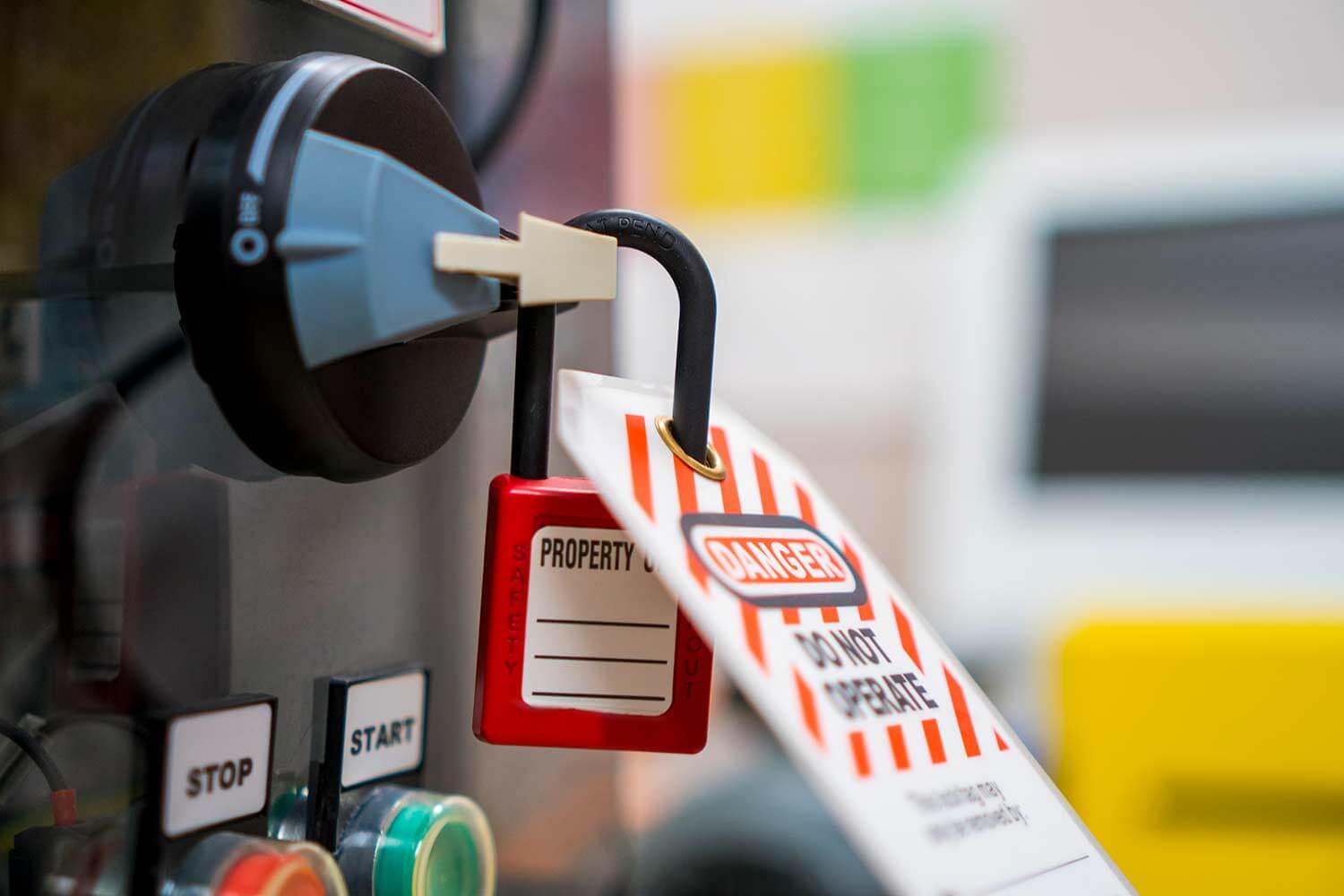
| Device | Purpose | Example Use Case |
|---|---|---|
| Lockout Hasps | Allows multiple locks on one disconnect | Group maintenance on a large motor |
| Circuit Breaker Locks | Secures breaker in off position | Electrical panels in industrial settings |
| Valve Lockouts | Prevents valve opening | Gas lines, steam systems |
| Plug Lockouts | Covers electrical plugs | Portable tools or small machines |
| Lockout Stations | Centralized storage for locks, tags, hasps | Shop floor or maintenance bays |
Invest in high-quality, standardized kits. Color-coding locks by department or energy type (e.g., red for electrical, blue for pneumatic) reduces confusion.
Pro insight: Use personal padlocks only—never shared keys. Each worker should have a unique lock with their name and contact info.
The Cost of Ignoring LOTO: Legal, Financial, and Human
Failing to implement LOTO isn’t just unsafe—it’s expensive.
- OSHA fines: Violations can exceed $15,000 per instance. Willful or repeated offenses can top $150,000.
- Downtime: Accidents halt production. Investigations and repairs take time.
- Reputation damage: Safety lapses erode employee trust and customer confidence.
- Human toll: Injuries cause pain, disability, and loss of life.
In 2022, a Pennsylvania factory was fined over $100,000 after a worker lost three fingers in an unguarded press. The investigation revealed no LOTO procedure existed. The cost of a few locks and tags was negligible compared to the penalty and human cost.
Building a Sustainable LOTO Program
A one-time training session isn’t enough. A robust LOTO program includes:
- Written procedures for every piece of equipment
- Annual audits with documentation
- Retraining whenever procedures change or errors occur
- Clear signage near energy sources
- Incident reporting for near-misses
Make LOTO part of safety culture—not just compliance. Encourage workers to speak up if they see a shortcut or defect.
Example: A plant in Ohio reduced LOTO violations by 78% after introducing visual checklists at each machine and monthly refresher drills.
Final Thoughts: LOTO Is More Than a Procedure—It’s a Promise
Understanding what lockout tagout (LOTO) is goes beyond memorizing steps. It’s about recognizing that behind every lock and tag is a human life. LOTO isn’t bureaucracy—it’s the difference between a safe shift and a life-altering accident.
Implement it rigorously. Audit it regularly. Teach it passionately.
If you oversee equipment maintenance, stop and ask: Is every machine in your facility covered by a clear, tested LOTO procedure? If not, that’s where your next action begins.
FAQ
What does LOTO stand for? LOTO stands for Lockout Tagout, a safety process to isolate energy sources and prevent accidental machine startup during maintenance.
Is tagging enough without a lock? No. Tags are warnings, not physical barriers. OSHA requires lockout unless the employer can prove the tag provides full protection—rare in practice.
Who can remove a LOTO lock? Only the authorized employee who applied the lock may remove it. In their absence, a supervisor may remove it following a formal, documented procedure.
What types of energy does LOTO control? Electrical, mechanical, hydraulic, pneumatic, chemical, thermal, and gravitational energy—all must be addressed.
How often should LOTO procedures be reviewed? OSHA requires annual inspections of LOTO procedures and employee practices to ensure compliance and effectiveness.
Do contractors need LOTO training? Yes. Any outside worker servicing equipment must follow the host employer’s LOTO program and be trained accordingly.
Can digital systems replace physical locks? Not currently. While electronic LOTO systems exist, they must still provide equivalent physical isolation and are tightly regulated. Traditional locks remain the standard.
FAQ
What should you look for in What Is Lockout Tagout (LOTO): A Complete Guide to Safety? Focus on relevance, practical value, and how well the solution matches real user intent.
Is What Is Lockout Tagout (LOTO): A Complete Guide to Safety suitable for beginners? That depends on the workflow, but a clear step-by-step approach usually makes it easier to start.
How do you compare options around What Is Lockout Tagout (LOTO): A Complete Guide to Safety? Compare features, trust signals, limitations, pricing, and ease of implementation.
What mistakes should you avoid? Avoid generic choices, weak validation, and decisions based only on marketing claims.
What is the next best step? Shortlist the most relevant options, validate them quickly, and refine from real-world results.